
Saturday, June 24, 2006

thou shalt love thy neighbour

Thou shalt not avenge, nor bear any grudge against the children of thy people, but thou shalt love thy neighbour as thyself


Thursday, June 22, 2006
Tuesday, June 20, 2006


Sunday, June 18, 2006
meaning something
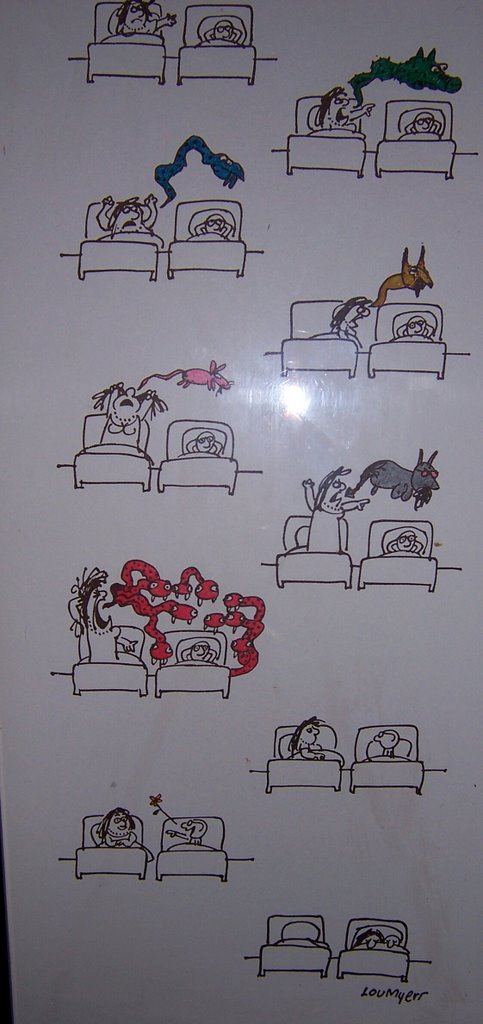
Every worthwhile relationship must have chaos in order for it to have any real meaning.
Saturday, June 17, 2006

Friday, June 16, 2006

Sunday, June 11, 2006












Saturday, June 10, 2006
Wednesday, May 31, 2006


Thursday, May 18, 2006

Wednesday, May 17, 2006
Thursday, May 11, 2006

Thursday, May 04, 2006



Sunday, April 30, 2006

Saturday, April 29, 2006

Friday, April 28, 2006


Tuesday, April 25, 2006





part II
~what are your options when your therapist admits he has
Narcissistic Personality disorder?
From: American Psychological Association
Studies Find Narcissists Most Aggressive When Criticized
Psychologists Brad J. Bushman, Ph.D., of Iowa State University and Roy F. Baumeister, Ph.D., of Case Western Reserve University conducted two studies in which they explored the connection between narcissism, negative interpersonal feedback, and aggression in 540 undergraduate students. Narcissists, according to the authors, are emotionally invested in establishing their superiority, yet while they care passionately about being superior to others, they are not convinced that they have achieved this superiority. While high self-esteem entails thinking well of oneself, narcissism involves passionately wanting to think well of oneself. In both studies, narcissism and self-esteem were measured, and participants were given an opportunity to act aggressively toward a neutral third party, toward someone who had insulted them, or toward someone who had praised them.
The psychologists found that the most aggressive respondents in both studies were narcissists who were attacking someone who had given them a bad evaluation. Narcissists were exceptionally aggressive toward anyone who attacked or offended them, yet when they received praise, their level of aggression was not out of the ordinary. In both studies, self-esteem was not related to aggression, suggesting that the relationship between self-esteem and aggressive behavior is small at best.
The researchers assert that people with high self-esteem are a heterogeneous group that may be more different than alike since high self-esteem can be an accurate appreciation of one's good traits, or it may be a highly doubtful sense of personal superiority that is not reality-based. While some individuals with high self-esteem are largely unaffected by feedback, others may require frequent confirmation and validation of their favorable self-image by others. Thus the psychologists assert that differences in the validity of individuals' self-esteem undermines its usefulness as a predictor of aggression. (imagine when your therapist is a self-admitted/diagnosed narcissist...?)
The authors suggest that aggression by narcissists is an interpersonally meaningful and specific response to an ego threat. "Narcissists mainly want to punish or defeat someone who has threatened their highly favorable views of themselves," the authors note. "People who are preoccupied with validating a grandiose self-image apparently find criticism highly upsetting and lash out against the source of it."
Article: "Threatened Egotism, Narcissism, Self-Esteem, and Direct and Misplaced Aggression: Does Self-Love or Self-Hate Lead to Violence?" by Brad J. Bushman, Ph.D., Iowa State University and Roy F. Baumeister, Ph.D., Case Western Reserve University, in Journal of Personality and Social Psychology, Vol. 75, No. 1.
(Full Text available from the APA Public Affairs Office)
Brad J. Bushman, Ph.D. via e-mail (bushman@iastate.edu)
Sunday, April 23, 2006


Saturday, April 22, 2006


Friday, April 21, 2006
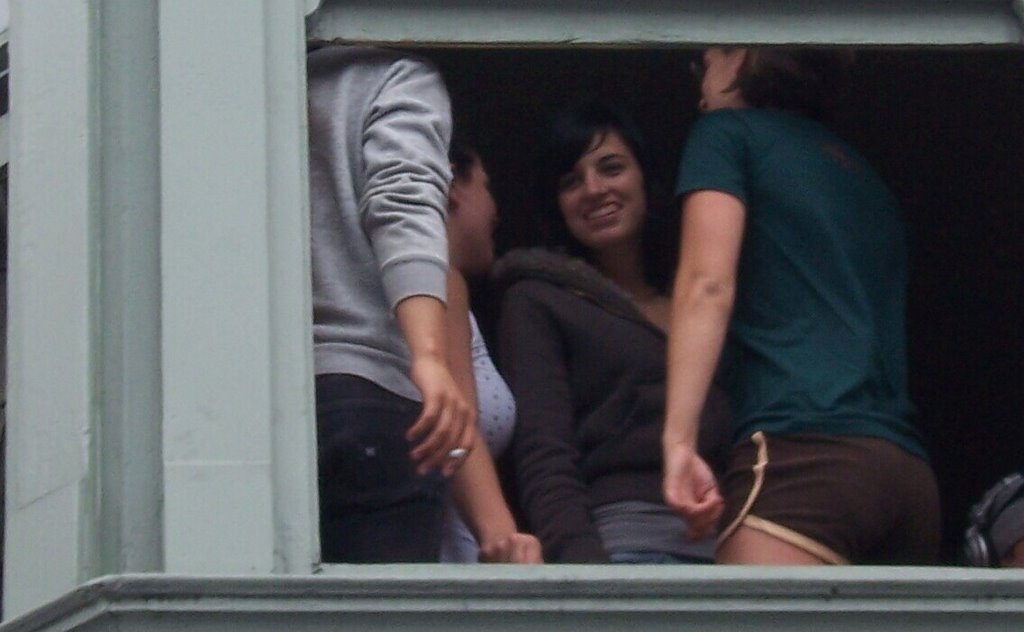
voyeur
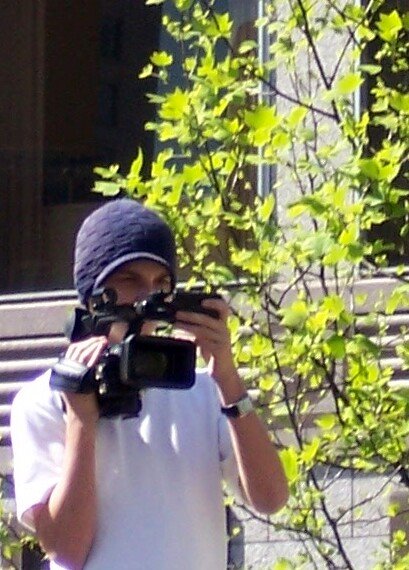
Voyeuristic practices may take a number of forms but their characteristic feature is that the voyeur does not directly interact with the object of their voyeurism (often unaware that they are being observed), instead observing the act from a distance by peeping through an opening or scaling a wall in union square and videotaping ummm me.
Thursday, April 20, 2006


Subscribe to:
Posts (Atom)
C'est moi

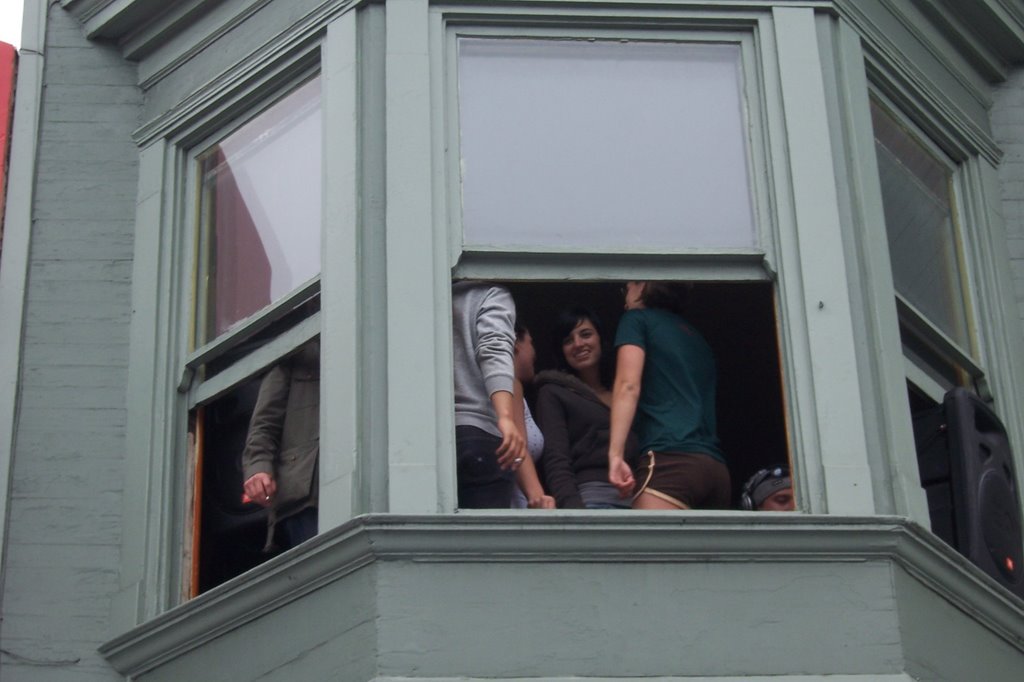

hummingbird break
for flight
